A motor goes down at 2 a.m. No warning, no heads up — just silence where there should be hum. If you’ve been in that situation, you already know what it costs. And if you haven’t yet, a little planning now goes a long way toward making sure you never do.
The good news is that building that plan isn’t as complicated as it sounds. It starts with one simple question, and everything else follows from there.
Not Every Motor Needs the Same Plan
Before you can decide how to maintain your motors, you need to identify which ones are most critical to your operation. That means walking the floor and asking: “If this motor fails right now, what happens?”
The answer to that question puts every motor in your facility into one of three categories:
- Critical motors are the ones that, if they go down, production stops. Think of the conveyor drive motor in a foundry, the pump motor keeping a city’s water treatment plant online, or the mixer motor at a cement plant.
- Important motors cause disruption when they fail, but there’s usually a workaround: maybe a redundant system, a manual process, or a backup unit that buys you some time.
- Non-critical motors are easy to replace, inexpensive to swap out, and their downtime doesn’t ripple through your entire operation. Running non-critical motors until failure can be a viable business decision.
Understanding Predictive vs. Preventative Maintenance for Electric Motors
These two terms get used interchangeably, but they’re actually quite different approaches, and knowing the difference is the foundation of any smart electric motor maintenance strategy.
What is predictive maintenance for electric motors?
Predictive maintenance is exactly what it sounds like: using data to predict when a motor is going to need attention before it actually fails. Before failure, motors exhibit trends — such as changes in vibration patterns, rising temperatures, and shifts in magnetic field readings — that signal trouble is coming. The key is having the technology in place to catch those signals early.
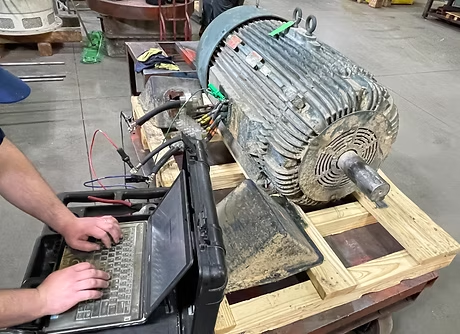
Our predictive maintenance approach uses two proven diagnostic tools: PdMA motor testing and vibration analysis. Our technicians come to your site on a regularly scheduled basis, or for one-off reliability checks, to assess your critical motors while they’re still running. PdMA testing evaluates six key areas of motor health including power quality, stator winding, and rotor condition without taking equipment offline, while vibration analysis catches mechanical issues like bearing wear, misalignment, and imbalance that electrical testing alone won’t detect. Together, they give us a clear picture of where each motor stands and where it’s heading. When we identify a concern, we make a plan together — whether that means continued observation, scheduling a repair during planned downtime, or an on-site visit to dig deeper.
What is preventative maintenance for electric motors?
Preventative maintenance takes a different approach. Instead of waiting for data to tell you something’s wrong, you perform scheduled, routine service based on what we know about how motors degrade over time, regardless of what the data currently shows. Think of it like getting your oil changed. You don’t wait for your engine to start knocking. You do it every 3,000–5,000 miles because that’s the best practice.
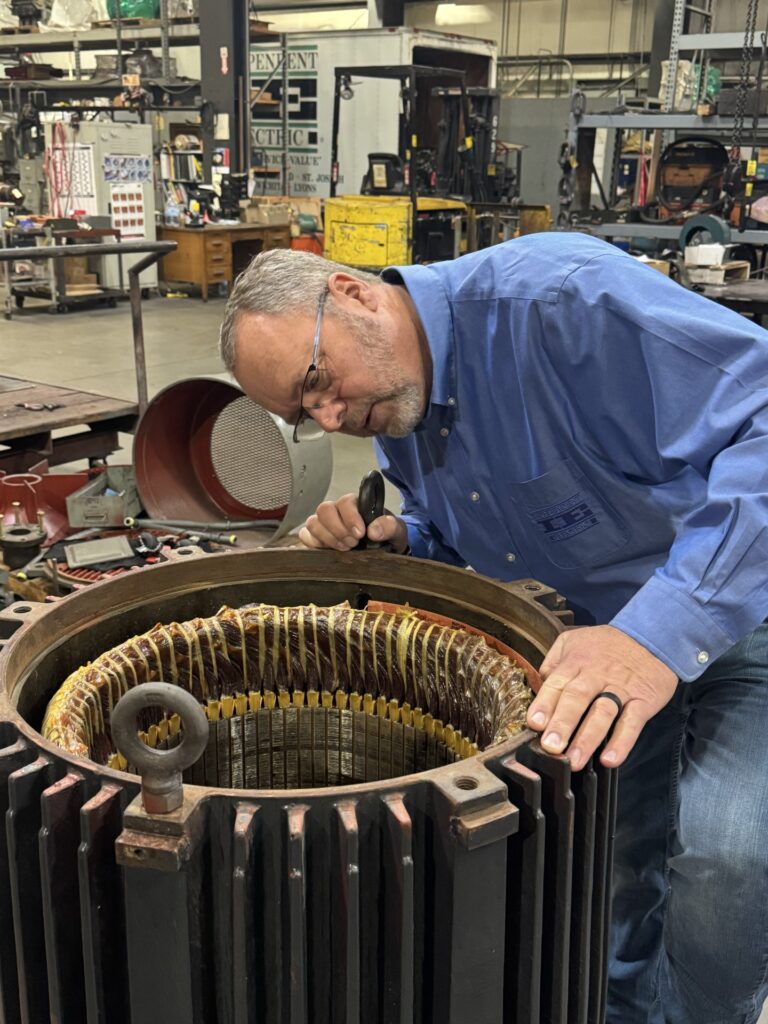
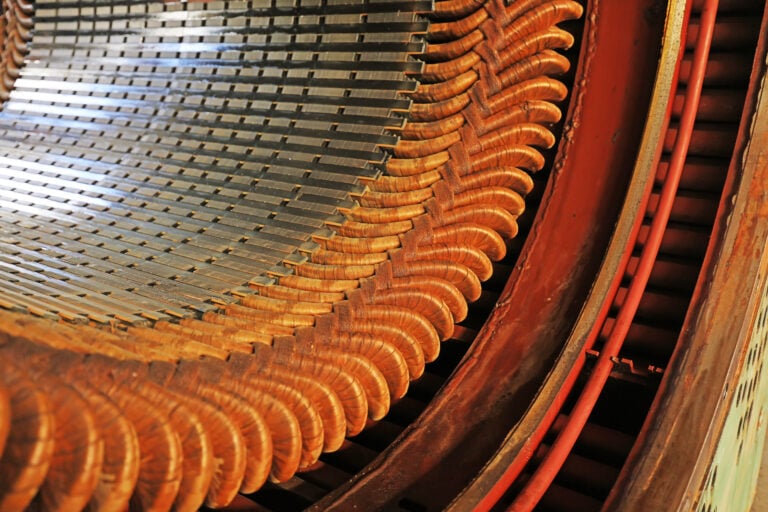
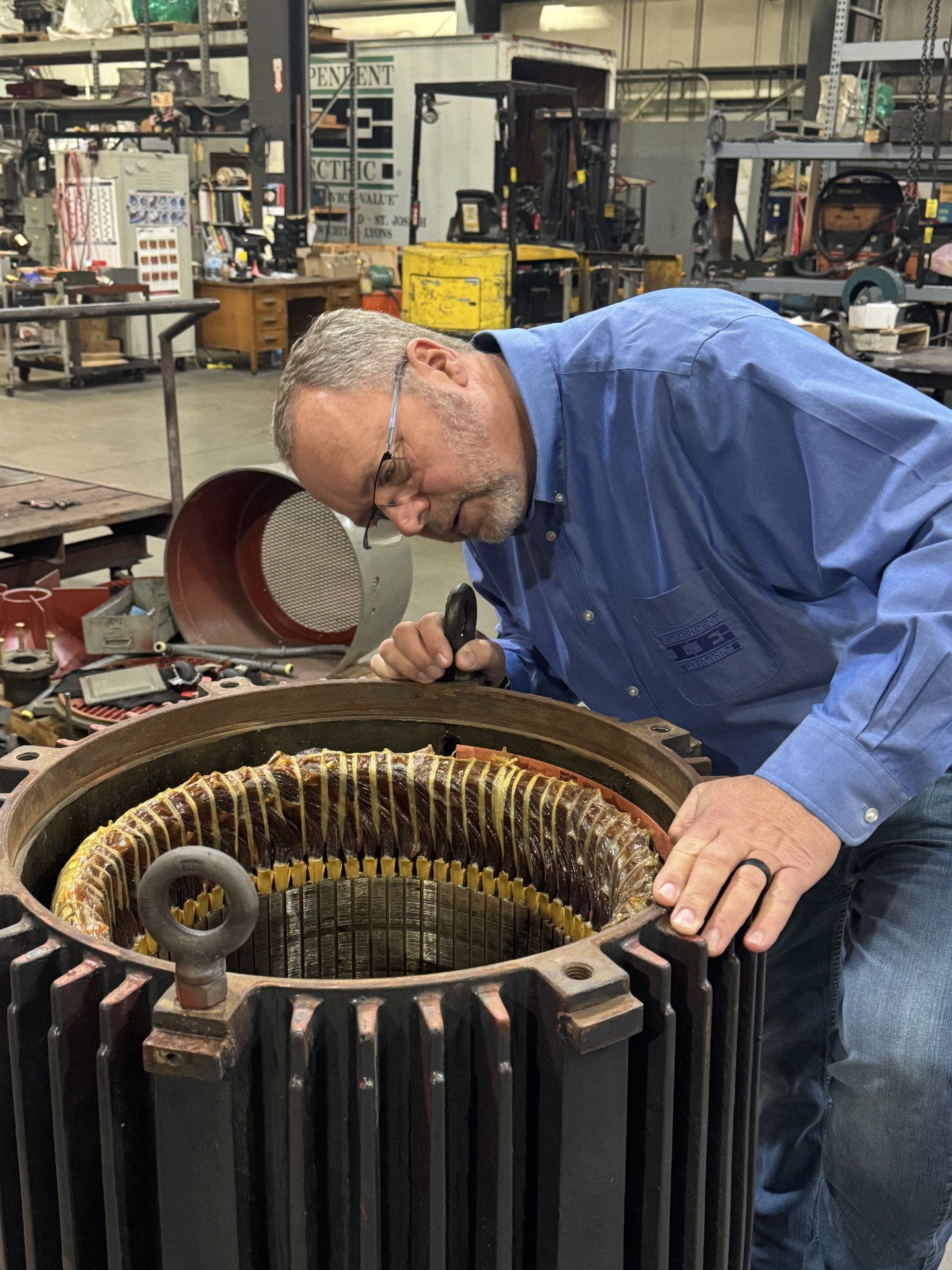
Our preventative maintenance programs include laser alignment, on-site balancing, bearing changes, power quality checks, and full motor cleanups to head off small issues before they grow into big ones. We look at stator winding condition, rotor health, motor shaft balance, and eccentricity — a thorough inspection that most in-house maintenance teams simply don’t have the equipment or training to perform.
Here’s a number worth knowing: approximately 60% of electric motor failures trace back to bearing problems. That means a scheduled bearing change, something that feels almost too simple, is actually one of the highest-impact things you can do to extend the life of your motors. It’s a routine fix that prevents catastrophic failures, and it’s a core part of what we do during preventative maintenance visits.
Which Approach Is Right for Your Facility?
Now that you understand the difference, here’s how to apply it using the motor tiers we talked about earlier.
- For your critical motors, the answer is almost always a comprehensive program that combines both predictive and preventative maintenance. You want regular predictive testing so you’re never caught off guard, plus scheduled inspections and minor repair work, like bearing changes, to catch and address the things periodic testing alone can’t see. The stakes are too high to pick one or the other. If that pump motor going down means your plant halts or your city loses water pressure, you want every layer of protection available.
- For your important motors, the right choice depends on a few factors. Do you have planned shutdown windows? If your plant shuts down for two or three weeks a year, that’s a perfect opportunity for us to come in and do thorough preventative maintenance work, bearing changes, cleanups, testing, on the motors that matter. If you don’t have regular shutdowns, a predictive sensor gives you the visibility to make smart decisions without having to guess.
- For your non-critical motors, a thoughtful run-to-failure strategy is completely legitimate — but it should be intentional, not accidental. That means knowing which motors are in this category, keeping a replacement plan in your back pocket, and making sure they’re not quietly getting reclassified as critical over time as your operation evolves.
How Predictive vs. Preventative Maintenance Fits Into a Complete Motor Maintenance Plan
Here’s the thing about predictive and preventative maintenance: they’re not competitors. The best motor maintenance plans use both, assigned to the right assets based on criticality and your facility’s operational reality.
A complete electric motor maintenance plan looks something like this:
- Inventory and prioritize. Walk your facility, list every motor, and assign each one a criticality rating using the tiering framework above.
- Layer in predictive monitoring. Schedule regular PdMA testing and vibration analysis on your critical assets so you always have eyes on their health.
- Build a preventative maintenance schedule. Align routine inspections with your shutdown windows and operational calendar so maintenance happens on your terms, not in response to a crisis.
- Establish baselines and track trends. Performance data becomes most valuable over time — not just as a snapshot, but as a story that tells you when something is starting to head in the wrong direction.
- Have a reliable partner in your corner. Someone who can respond fast when testing flags an issue, diagnose problems on-site without pulling your motor unnecessarily, and deliver the quality repairs that actually make your motors last longer.
That’s exactly what our reliability services are designed to provide. We combine real-time predictive monitoring with scheduled preventative care to give your critical equipment the full-coverage approach it deserves. Our team works with you to build a customized plan — not a one-size-fits-all package — but a program that reflects your specific motors, your specific operation, and your specific goals for uptime and reliability.
We’ve been doing this for over 100 years. We’ve seen what happens when facilities have a plan and what happens when they don’t. The difference is significant, and it’s not complicated to get on the right side of it.
What are the 4 P’s of maintenance?
The 4 P’s of maintenance are People, Parts, Processes, and Planning. You need trained technicians who know what they’re looking at, quality parts that don’t introduce new failure points, proven testing and inspection processes that catch the right things, and a forward-looking plan that keeps maintenance proactive rather than reactive. When you work with Independent Electric, we bring all four to the table — our experienced field technicians, quality materials, PdMA and vibration analysis expertise, and a customized maintenance plan built around your specific operation.
Ready to Build Your Motor Maintenance Plan?
You don’t have to figure this out alone. Our team will sit down with you, walk through your motor inventory, and help you build a customized plan that matches the right maintenance strategy to every asset in your facility. No pressure, no unnecessary upsell — just a straight-shooting conversation about what actually makes sense for your operation.