For maintenance teams managing electric motors, the stakes are high. A single failure can bring operations to a halt, resulting in costly downtime, delayed orders, and frustrated teams. But failure isn’t inevitable. With route-based maintenance, teams shift from reactive firefighting to proactive protection—identifying risks before they escalate and scheduling interventions on their terms, not the motor’s.
What is route-based maintenance?
Route-based maintenance refers to a scheduled, data-driven strategy where electric motors are evaluated at regular intervals using predictive testing technologies. It differs from reactive maintenance (waiting until something breaks) and even traditional time-based schedules.
This strategy emphasizes:
- Vibration analysis
- Online and offline electrical testing (e.g., PDMA)
- Monitoring trend data over time
The goal: detect early signs of failure and use historical performance data to know when to take action, before failure occurs.
How often should I schedule route-based maintenance?
Not every motor requires monthly testing, but some do. The frequency of route-based testing depends on motor criticality. Motors that would shut down production are considered the most critical, and for these, we recommend monthly checks. A less vital motor could be on a quarterly or biannual testing schedule, depending on additional factors such as what happens when it fails, its environment, how often it runs, and the availability of spares or turnaround time needed for repair. Our experts work with your operations team to assess these factors.
Technicians use these answers to tailor a route-based schedule. As the team collects data, they monitor for consistency and adjust testing intervals based on equipment stability or emerging anomalies.
What happens during route-based motor maintenance?
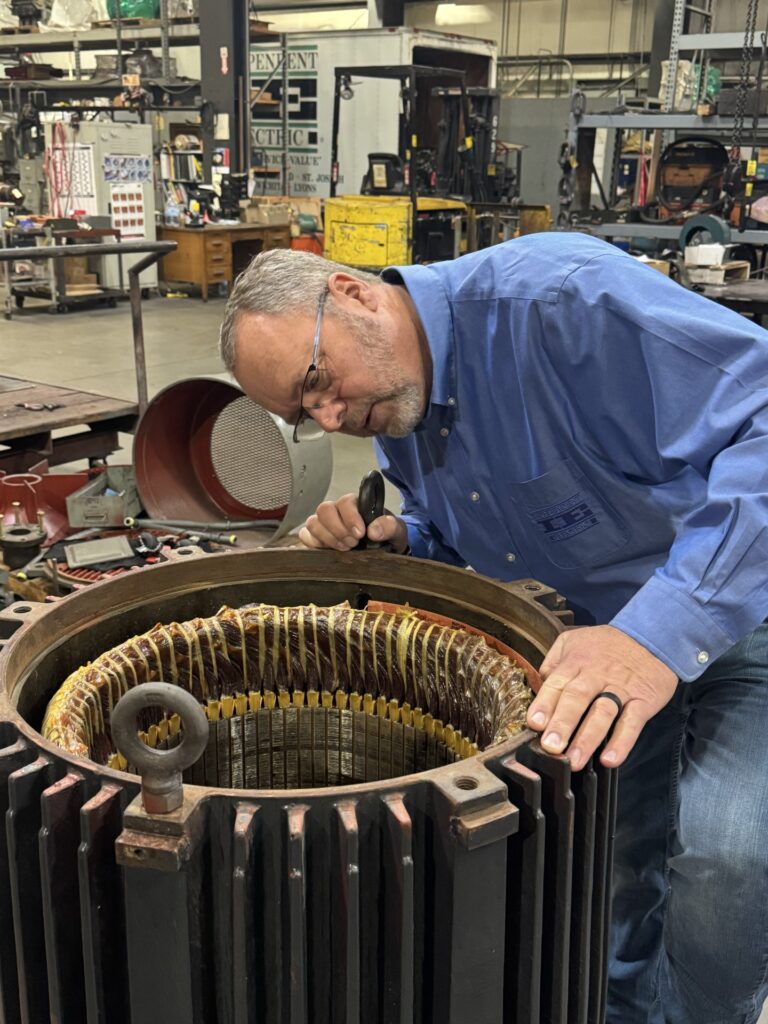
Technicians perform quantitative testing with diagnostic equipment:
- Vibration analysis detects imbalance, misalignment, or bearing wear.
- Motor circuit testing (PDMA) evaluates insulation integrity and power quality.
These tests generate trend data, which technicians use to identify performance shifts. Detecting small deviations early allows maintenance teams to:
- Schedule repairs before failure
- Order parts proactively
- Reduce labor strain and overtime
What is the ROI of route-based maintenance?
Major failures cost four to ten times more than routine maintenance. That doesn’t include lost production time, expedited shipping fees, or unplanned labor costs.
| Scenario | Typical Cost |
|---|---|
| Minor maintenance and bearing replacement | $3,000 – $5,000 |
| Emergency rewind from failure | $20,000 – $180,000+ |
Additional benefits include:
- Safer working conditions for your team: By identifying and addressing issues before they escalate, teams minimize the risk of dangerous failures. This reduces exposure to emergency repairs in hazardous conditions.
- Fewer emergency service calls: With a proactive schedule in place, operations teams avoid late-night breakdowns and costly emergency dispatches.
- More time for strategic improvements: Freed from the cycle of reactive repairs, maintenance staff can focus on long-term improvements and higher-value initiatives.
Questions We’re Often Asked
What’s the most common failure on electric motors?
Bearing failure accounts for approximately 60% of electric motor breakdowns. Learn more about how to prevent them.
How often should motors be tested?
It depends on how critical the motor is to operations. High-impact motors may need monthly checks, while others can be evaluated quarterly.
Is this relevant if we have an in-house team?
Yes. Many internal teams handle repairs but lack certified equipment and expertise to collect and analyze trend data. Route-based testing fills that gap.
What’s the difference between route-based and condition-based maintenance?
They’re related. Route-based testing is scheduled and used to build the performance history that condition-based strategies rely on.
Why Choose Independent Electric
Maintenance teams choose Independent Electric for:
- Our team of certified predictive maintenance technicians
- PDMA analyzers, vibration testers, and calibrated diagnostic tools
- Custom schedules based on actual operating conditions
Failure is expensive. Downtime is disruptive. And rewinds don’t come cheap!
Schedule a free maintenance audit to learn how route-based testing can improve uptime, extend equipment life, and protect your operations. Contact us at Independent Electric to schedule your audit.