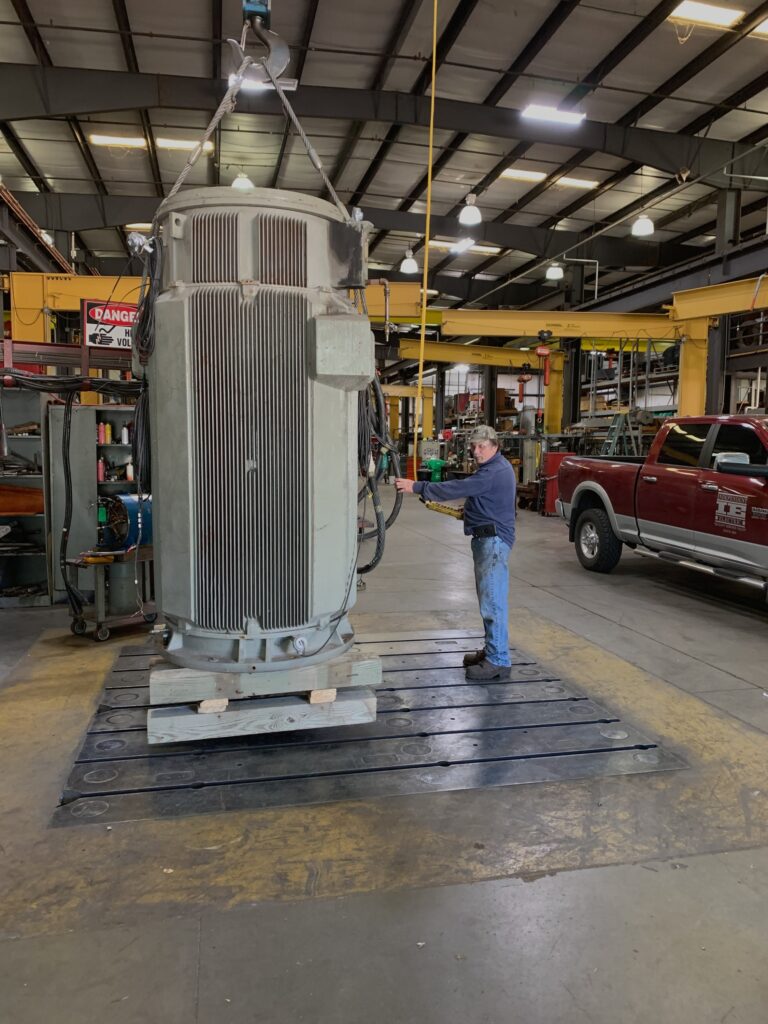
Most maintenance managers understand motor repair and rewinding. But when core iron testing reveals excessive losses in the stator laminations, you face a more complex decision: motor restacking. This advanced rebuild can save tens of thousands of dollars on large motors—but only when the economics make sense.
At Independent Electric, we encounter this scenario regularly with motors above 600 horsepower. When core testing shows the iron has too much loss measured in watts per pound, we can’t simply rewind the motor because it won’t meet efficiency requirements. That’s when restacking often becomes the best path forward for these critical motors.
What Core Iron Failure Means for Your Motor
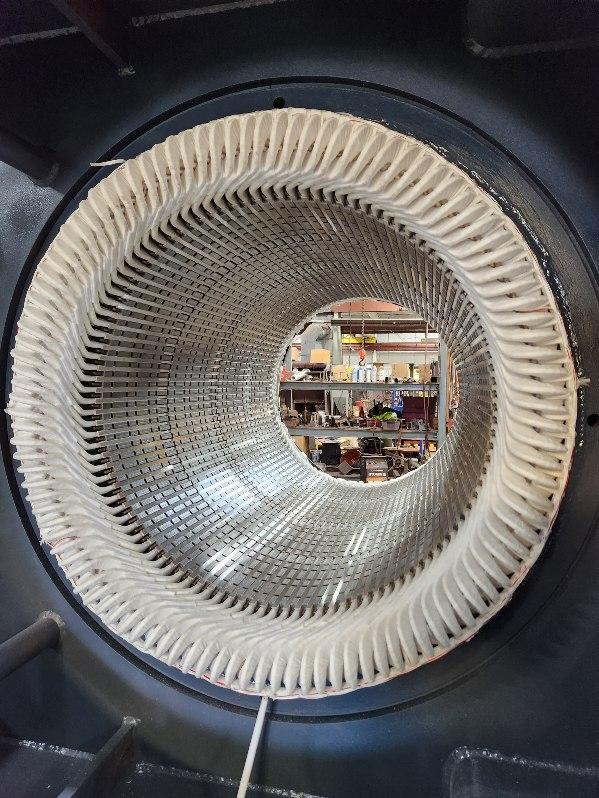
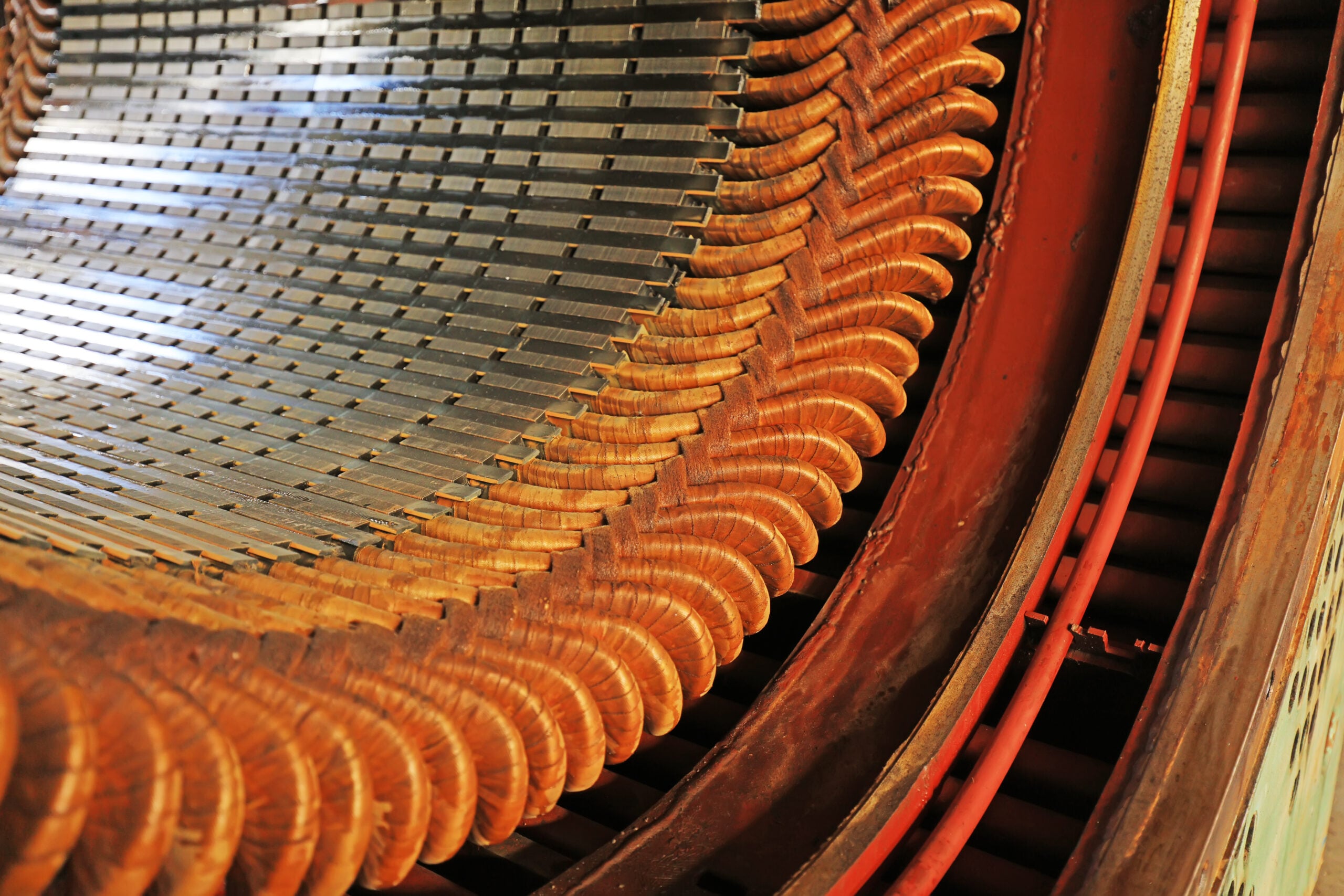
A motor stator consists of thousands of thin steel sheets called laminations—each about as thick as paper, stacked and compressed together. Each lamination has insulation coating on both sides that prevents wasteful electrical currents from flowing between sheets.
When this system fails, motor efficiency drops below acceptable levels. The motor still runs, but it wastes energy and generates excessive heat.
What Causes Core Iron to Fail
- Repeated heat cycling: Every rewind requires high-temperature oven treatment. After 4-5 rewinds, cumulative thermal stress compromises lamination insulation.
- Mechanical damage: When bearings fail and the rotor drops, it can drag against stator laminations, creating localized hotspots.
- Insulation breakdown: Over decades, the coating between laminations deteriorates, allowing efficiency-robbing eddy currents.
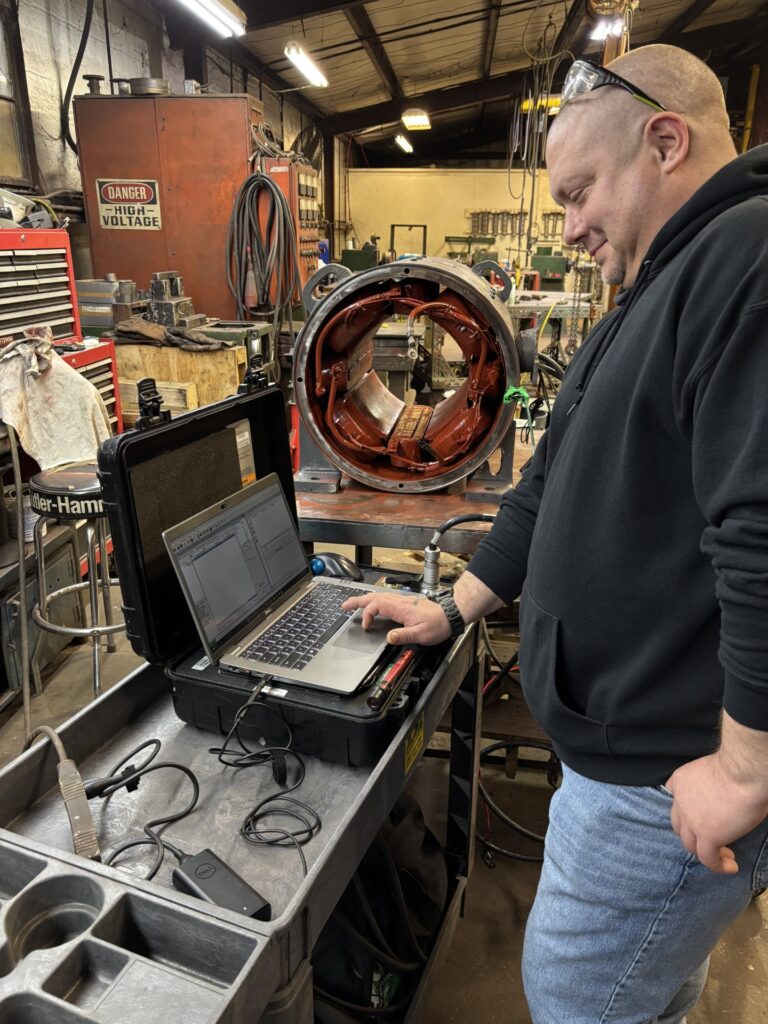
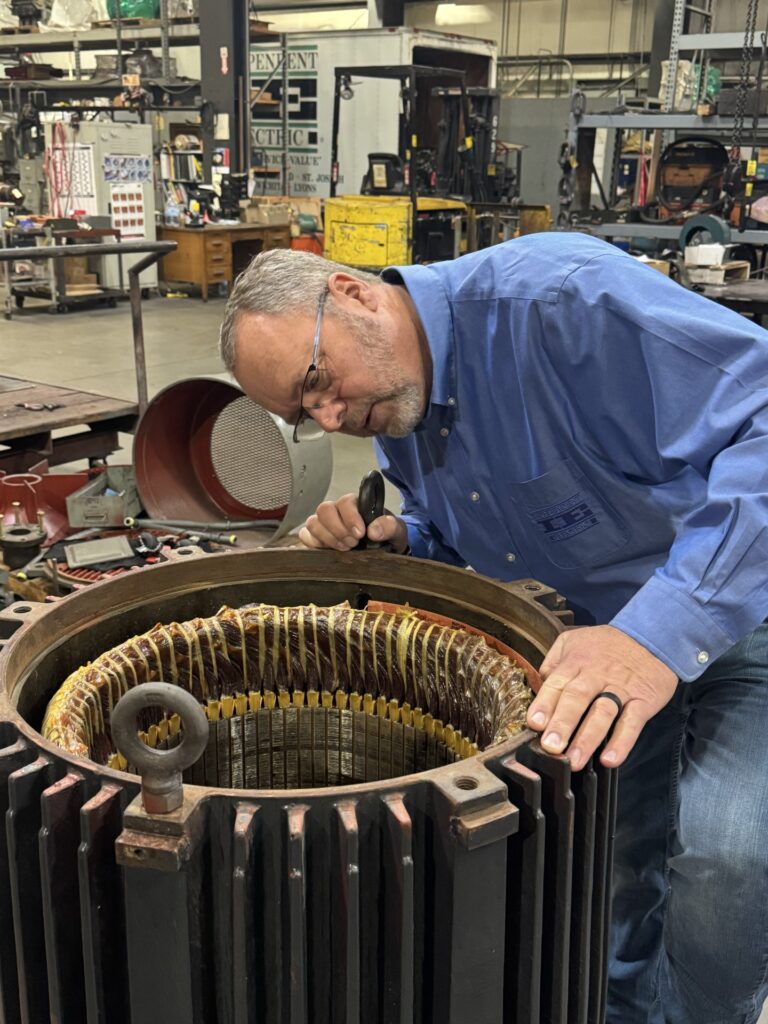
Our core testing uses infrared thermal imaging and electrical measurements to identify these failures before catastrophic damage occurs.
Core Testing: Revealing the Problem
We induce current through the stator core and measure watts per pound of loss. This testing tells us whether the core iron can support another rewind or if restacking is necessary.
If results fall within EASA AR100 standards, the iron is good for another rewind. If not, we have two options: replace the motor entirely or restack it with new laminations.
This prevents the costly mistake of investing in a complete rewind only to discover the core can’t support efficiency requirements.
The Economic Threshold: When Restacking Makes Sense
At Independent Electric, we’ve restacked many motors over 600 horsepower. Below that threshold, restacking rarely makes sense unless replacement motors are unavailable, the motor is proprietary, or accommodating a different motor requires cost-prohibitive modifications.
Cost Comparison by Motor Size
- Motors Above 600 HP: A 2,000 HP motor might cost $200,000 to replace with a long lead time from the factory, while a complete rebuild with a restack might cost around $125,000. So, the rebuilding and restacking approach comes in with a shorter lead time and about two-thirds of the cost of replacement.
- Motors 400-600 HP: Case-by-case analysis required based on specialized specifications, custom mounting, or replacement lead times.
- Motors Under 400 HP: Restacking rarely justifies the investment unless the motor is truly irreplaceable.
Beyond Horsepower: When Application Justifies Restacking
- Custom specifications requiring extensive modifications for replacement
- Replacement motor lead times of 6-12 months
- Physical mounting constraints where standard motors won’t fit
- Proprietary designs no longer manufactured
- Harsh operating environments requiring specialized construction
The Partial Replacement Alternative
Complete restacking isn’t always necessary. When core damage is localized, strategic partial replacement can sometimes address the problem at a fraction of the cost.
We can unweld a section, remove damaged laminations, and reinstall remaining laminations in a rotated pattern, shifting each lamination by one slot to spread any minor damage across the stator circumference.
Removing one or two damaged laminations from accessible ends often achieves acceptable efficiency while saving thousands compared to a full restacking.
When partial replacement works:
- Damage affected only a small section
- Most laminations meet efficiency standards
- Damage exists primarily in accessible end laminations
- Re-testing confirms requirements after partial replacement
This approach makes repair viable for motors in the 400-600 HP range where complete restacking economics don’t justify the investment.
Making Your Restacking Decision
Phase 1: Core Testing Results
- What are the watts per pound loss measurements?
- How do results compare to EASA AR100 standards?
- Is the damage localized or distributed?
- Can partial replacement address it?
Phase 2: Economic Analysis
- Motor horsepower rating (threshold typically 600+ HP)
- Restacking cost vs. replacement cost
- Timeline for each option
- Required mechanical modifications
Phase 3: Application Factors
- Is the motor custom-designed for this application?
- Are replacement motors readily available?
- What are long-term supportability considerations?
When to Choose Restacking vs. Replacement
| Restacking is likely better when… | Replacement is likely better when… |
|---|---|
| Motor exceeds 600 HP and replacement costs are significantly higher | Motor is under 400 HP and replacement costs are similar to restacking |
| Motor has custom specifications difficult to source | Core damage is too extensive |
| Core testing confirms damage is repairable | Multiple mechanical failures suggest broader issues |
| Application requires specifications replacement motors don’t match | Modern efficiency improvements justify the investment |
Finding a Shop with Restacking Capability
Not all shops have restacking capabilities. When evaluating shops, confirm:
- EASA accreditation demonstrating rigorous testing
- Core testing equipment, including infrared thermal imaging
- Established lamination manufacturer relationships
- Documented restacking history in your horsepower range
- Comprehensive testing facilities
Ask how many motors above 600 HP they’ve restacked recently, their success rate for meeting efficiency specifications, and how they handle situations where restacking doesn’t achieve required results.
The Bottom Line on Motor Restacking
Motor restacking makes economic sense for large, critical, or specialized motors with compromised core iron that are difficult or cost-prohibitive to replace. The 600+ HP threshold provides guidance, but the decision depends on replacement availability, application requirements, and whether core testing confirms the damage is repairable.
Strategic partial lamination replacement offers a middle ground for 400-600 HP motors—addressing localized damage without the full restacking investment.
The key is honest assessment based on rigorous core testing. When you get accurate diagnostics from a qualified shop, you can make the restacking investment with confidence.