When a critical electric motor fails in your facility, the clock starts ticking. Every hour of downtime costs money, and the pressure to make the right decision—fast—is intense. Should you repair the motor? Does it need a complete rewind? Or replace it entirely?
This isn’t just a maintenance question. It’s a strategic decision that impacts your operating budget, production reliability, and long-term equipment performance. Make the wrong call, and you might waste money on a repair that fails prematurely. Or spend unnecessarily on a new motor when a quality rewind would have served you better for years to come.
We’ve spent over a century helping maintenance managers navigate these exact decisions. With EASA-accredited facilities across Kansas and Missouri, Independent Electric applies systematic diagnostic protocols to determine the most cost-effective path forward.
In this article, we’ll share insights from Jeff Martin, Independent Electric’s VP of Shop Operations, to help you make the right decision when it comes to your electric motors. We’ll cover how we assess your motor to recommend an approach and provide answers to the questions we’re most commonly asked when it comes to repair strategies.
First Step: Initial Inspection
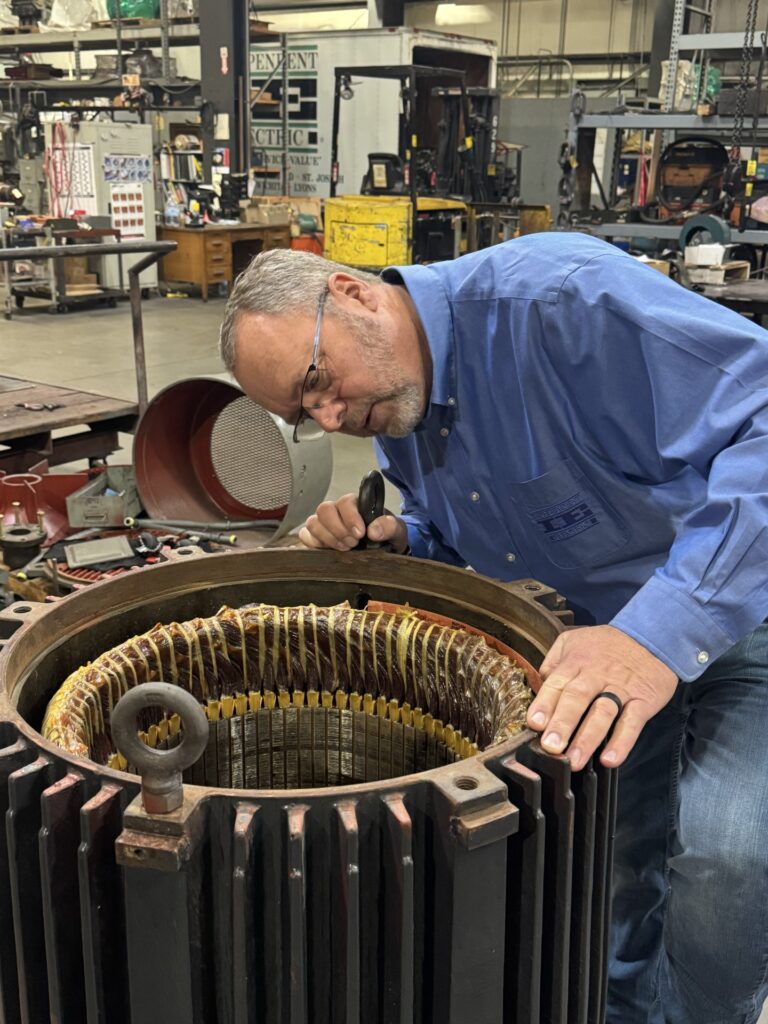
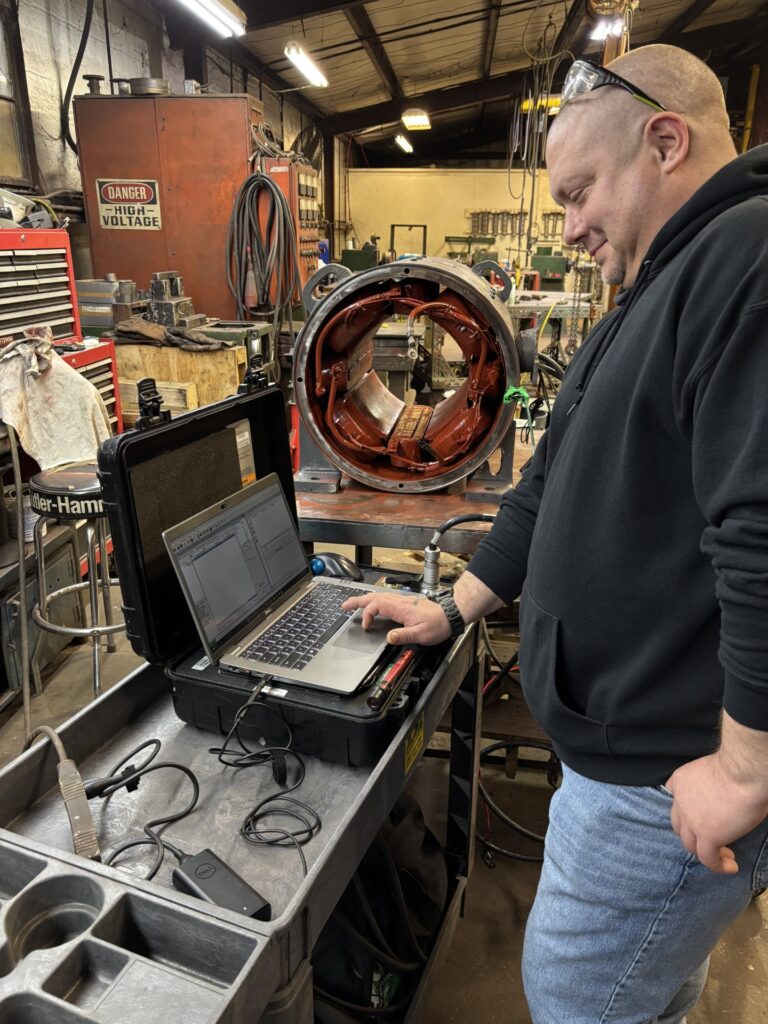
“The first thing we do is a visual inspection,” Martin explains. “Then we run an insulation resistance test to check if the motor is shorted or grounded. Finally, we do a mechanical test—rotating the shaft to check for bearing noise, roughness, or dragging. This three-part assessment tells us exactly what we’re dealing with before we make any recommendations.” At Independent Electric, we perform these inspections within 24 hours of receiving your motor in our shop.
The Big Cost Question: Is Motor Rewind vs. Replacement Cheaper?
The answer depends entirely on your motor’s size, application, and condition. But there’s a critical threshold that changes the economics dramatically.
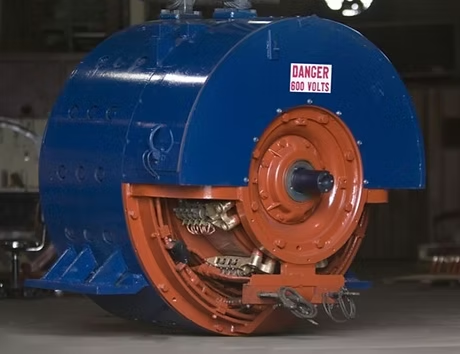
“There’s a rule of thumb we consider,” Martin notes. “If a motor comes in at 75 horsepower or more, there’s a good chance we can repair it more economically than replacing it.” As motors climb to 100, 200, 300, or 600 horsepower, replacement costs escalate significantly. If the motor only needs a rewind and the rotor remains in good condition, the economics clearly favor repair.
For smaller motors under 75 HP, replacement often makes more financial sense—particularly for standard applications where new motors are readily available and competitively priced. However, even smaller motors with specialized applications may warrant rewinding when replacement units aren’t easily sourced or when the existing motor has unique specifications.
How Much Does Motor Rewinding Cost?
- Motor size and horsepower: Larger motors require more labor and materials, but offer better cost savings when compared to replacement
- Voltage and winding complexity: Medium voltage motors and specialized windings increase complexity and cost
- Core condition: If core iron testing reveals excessive losses, restacking may be required, a labor-intensive process that will add to your total repair cost
- Material quality: Premium materials, like inverter-duty wire and top-grade varnish, cost more upfront but pay off by extending motor life
- Additional repairs needed: Bearing replacement, shaft repair, or mechanical work adds to the total cost
A quality motor rewind from an EASA-accredited shop typically ranges from 30-60% of new motor replacement cost for motors above 75 HP. This cost difference compounds when you consider that properly rewound motors can deliver decades of additional service.
How Do I Know If My Motor Needs Rewinding?
How to Tell If a Motor Has Bad Windings
An insulation resistance test is the primary diagnostic tool for winding condition.
“The varnish that we put on the winding insulates the winding wires from shorting,” Martin explains. “When we run an insulation test, we’re verifying that the insulation on that wire is adequate. If there are cracks or deviations in it and moisture gets in, that insulation resistance check will tell us the insulation on that wire is inadequate to perform at its expected levels.”
Warning signs of bad windings include:
- Failed insulation resistance test: Low megohm readings indicate compromised insulation
- Grounded motor condition: When insulation breaks down completely, allowing current to reach the motor frame
- Excessive heat during operation: Poor windings generate more heat than properly insulated motors
- Burning odor or visible discoloration: Physical signs of insulation breakdown from overheating
- Tripping breakers or overcurrent conditions: Electrical faults from compromised winding insulation
Is It Worth Rewinding a Motor?
The Quality Factor: Why Not All Motor Rewinds Are Equal
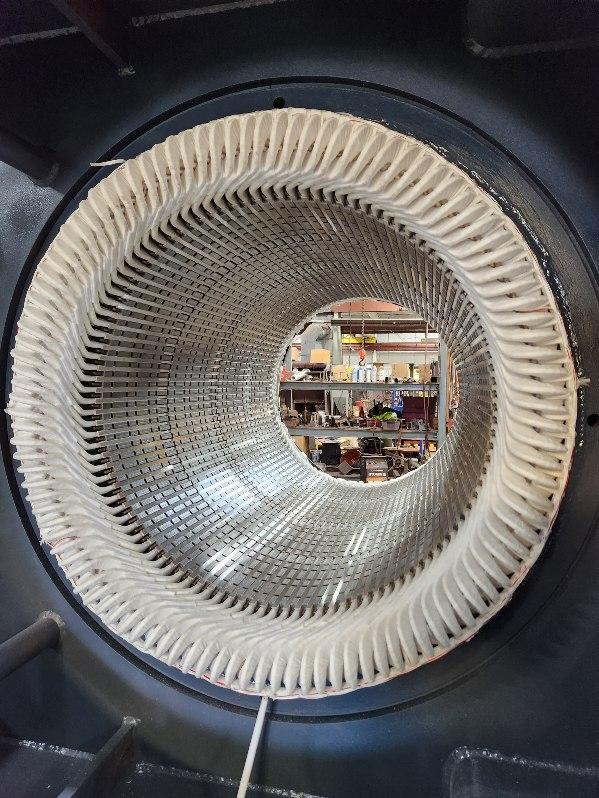
“When we rewind a motor, our motors are better than the factory version,” Martin states confidently. “We use all inverter-duty wire, better insulating paper, and better varnish. We use top-of-the-line varnish for our dip tanks and vacuum impregnation. It’s more expensive, but that’s part of the reason we offer a better product than the factory.”
How Many Times Can a Motor Be Rewound?
A properly maintained motor can typically be rewound 3-5 times over its service life, assuming the core iron remains in good condition. The limiting factor isn’t the windings themselves—it’s the condition of the stator core laminations.
“We actually core test that iron, and what we’re looking for is any losses,” Martin describes. “We’re trying to understand if the efficiency of that iron is good enough to make a magnet out of. If it has too much loss measured in watts per pound, and that rating falls outside our standard, then we won’t be able to rewind the motor because it won’t meet the efficiency standard.”
When core iron testing reveals excessive losses, two options exist:
- Core restacking: Installing all new laminations with fresh insulation coating—essentially rebuilding the entire stator core
- Motor replacement: If restacking costs approach replacement costs, a new motor may be the more economical choice
When Motor Rewinding Is Best
- Large horsepower motors (75 HP and above): Economics heavily favor rewinding when motors exceed this threshold
- Specialized or custom applications: When motors have unique specifications that make replacement difficult or expensive to source
- Critical equipment: When production cannot wait for procurement (some factory lead times for specialty motors can exceed six months!)
- Good mechanical condition: When bearing assemblies, shaft, and housing remain in serviceable condition
- High-efficiency motors: Maintaining existing premium efficiency motors often delivers better long-term value than standard replacement units
When Replacement Is Best
- Small motors with standard frames: Where replacement motors are readily available and cost-competitive with quality rewinds
- Multiple mechanical failures: When bearings, shaft, housing, and windings all require significant repair
- Failed core iron testing: When excessive core losses make even restacking uneconomical
- Obsolete designs: When modern motors offer significantly better efficiency or features that justify replacement
- Energy efficiency upgrades: When newer premium efficiency motors deliver energy savings that justify replacement costs
Independent Electric maintains an inventory of new and quality used electric motors for scenarios where replacement makes the most sense.
Making Your Decision: The Systematic Approach
- Initial Assessment — Visual inspection, insulation resistance testing, mechanical rotation test
- Economic Analysis — Apply the 75 HP threshold, get quotes for both options
- Technical Evaluation — Core iron testing, assessment of mechanical components
- Quality Verification — Confirm EASA accreditation, verify material quality specifications
- Strategic Considerations — Impact on production schedules, long-term maintenance strategy
Partner With Motor Experts Who Prioritize Your Best Interest
Call (800) 833-2610 or send us a note to schedule a consultation with our team.